

Liquid Biopsy (ctDNA Analysis)
Liquid Biopsy is a cutting-edge, non-invasive Next-Generation Sequencing (NGS) solution designed to overcome the physical and temporal limitations of traditional tissue biopsies in oncology. By analyzing circulating tumor DNA (ctDNA) and circulating tumor cells (CTCs) shed into the bloodstream, Liquid Biopsy enables comprehensive genomic profiling, real-time treatment monitoring, and early detection of drug resistance mechanisms without requiring surgical intervention.
Key Features & Advantages
- Non-Invasive & Patient-Friendly: Requires only a standard peripheral blood draw, completely eliminating procedure-related surgical risks, pain, and recovery times.
- Captures Tumor Heterogeneity: While a tissue biopsy only captures a single geographic site of a tumor, liquid biopsy integrates ctDNA shed from both primary and metastatic lesions across the body.
- Early Detection of Resistance & MRD: Detects Minimal Residual Disease (MRD) and secondary resistance mutations (e.g., EGFR T790M) months before tumor recurrence becomes visible on clinical imaging (CT, MRI, PET).
- Real-Time Longitudinal Tracking: Allows oncologists to dynamically monitor treatment response, evaluate therapeutic efficacy, and adapt targeted regimes instantly.
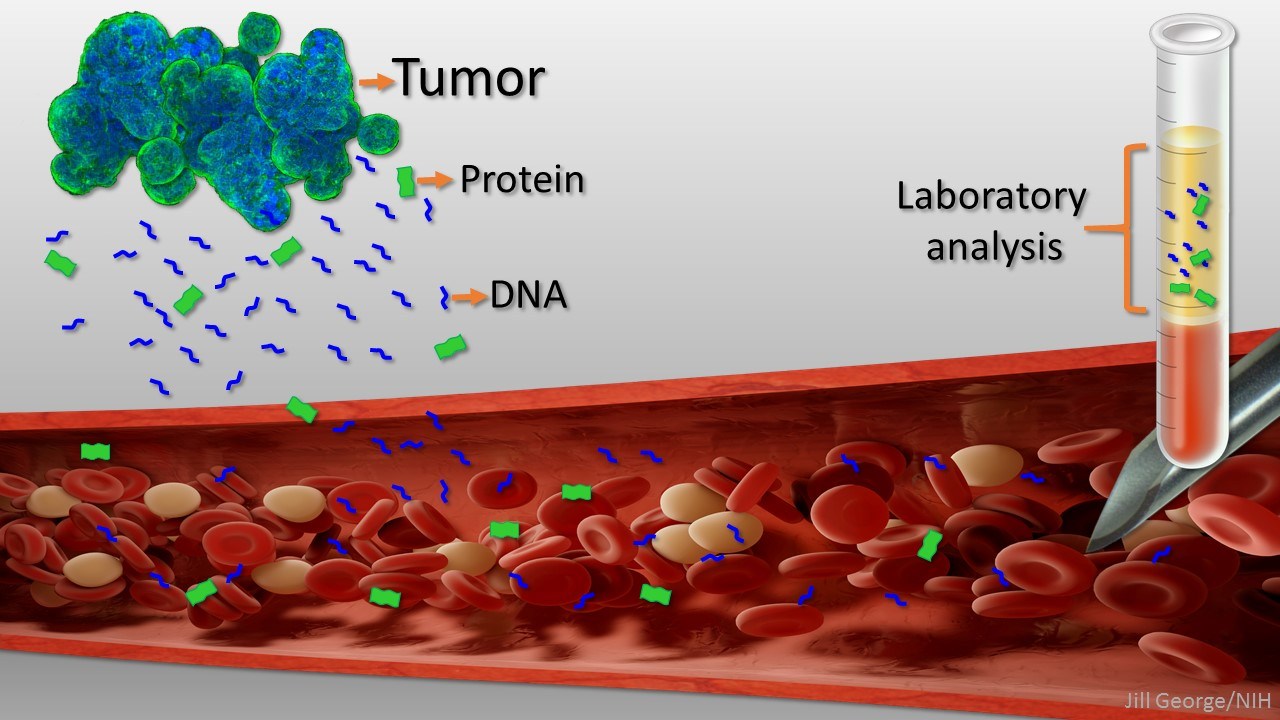
Liquid Biopsy vs. Traditional Tissue Biopsy
| Feature | Liquid Biopsy (ctDNA Analysis) | Traditional Tissue Biopsy |
| Sample Type | Peripheral Blood (Non-invasive) | Surgical tissue / Core needle (Invasive) |
| Patient Risk & Comfort | Painless / Zero surgical risk | Painful / Risk of infection, bleeding, or collapse |
| Tumor Heterogeneity | High (Captures systemic multi-focal ctDNA) | Low (Restricted to the sampled site) |
| Repeatability | Easily repeatable at any clinical milestone | Difficult, invasive, and rarely repeatable |
| Turnaround Time | Rapid analysis & longitudinal tracking | Slower (Requires tissue fixation & sectioning) |
Key Applications
- Targeted Therapy Selection: Identifying actionable biomarkers (e.g., EGFR, KRAS, BRAF, ALK) in non-small cell lung cancer (NSCLC), colorectal cancer, breast cancer, and melanoma.
- Minimal Residual Disease (MRD) Assessment: Evaluating post-surgical or post-chemotherapy residual disease to stratify relapse risk.
- Acquired Resistance Profiling: Mapping secondary driver mutations that emerge under targeted therapy pressure to pivot clinical management.
- Inaccessible Tumor Profiling: Providing genomic diagnostic alternatives when tissue biopsies are contraindicated or anatomical sites are unreachable.
The Nucleus Genetics Advantage: Incorporating Unique Molecular Identifiers (UMIs) to eliminate sequencing errors, ultra-deep NGS panels, and specialized clinical oncology pipelines, we detect trace amounts of ctDNA with >99% analytical specificity.
Get Information About This Service
Our expert team is ready to answer your questions and offer tailored solutions.
Contact Form →